
Guides
Thermal Brush vs Hot Air Brush
Start with whether your hair needs drying or shaping, then check how the tool works.
BeKind's editorial team brings together product specifications, model instructions and practical styling guidance.
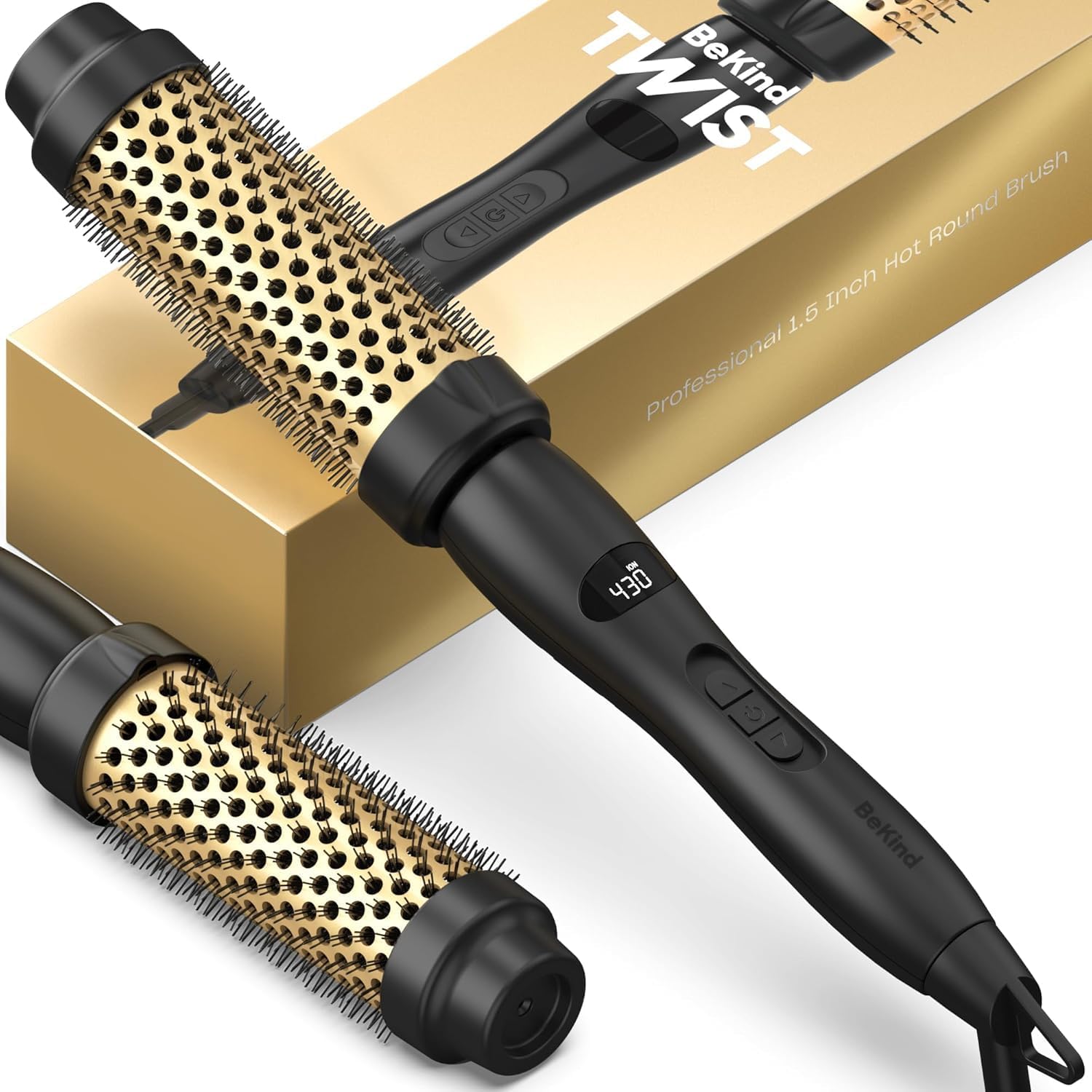
The difference is how the tool delivers heat
A thermal brush uses a heated barrel and bristles to shape dry hair through contact. A hot air brush moves warm air through a brush head to dry and shape hair within the limits described by its manual. The round shape of either head can create a similar silhouette in a photo, so check the drying instructions before buying.
BeKind Twist Pro BH008 is a 1.5-inch thermal brush. The bristles guide a section as the barrel supplies heat. Its LCD shows the heat setting and the tool starts on completely dry hair.
| Decision point | Thermal brush | Hot air brush |
|---|---|---|
| How it works | A heated barrel shapes a section guided by bristles | Air flows through the brush head to dry and shape hair |
| Preparation | Start with completely dry, detangled hair for Twist Pro | Use the moisture level specified by the model's manual |
| When it fits | Shaping dry roots, lengths or ends | Drying and shaping in an airflow-led routine |
| Controls to check | Barrel size and heat setting | Air speed, heat controls and drying directions |
Which brush makes sense for your routine?
Think about the point when you want to pick up the tool. If your hair is still damp after washing and you want one tool to handle drying and shaping, look for a hot air brush whose manual covers that starting moisture level. Check whether it requires towel drying first and which settings are intended for drying.
If your hair is already dry and you want to lift the roots or round the ends, a thermal brush gives you a separate shaping step. With Twist Pro, choose one section to try first and use the lowest effective heat. A deliberately small section gives you space to find a brush angle that releases smoothly.
Can a thermal brush make a blowout-style finish?
A thermal brush can create the rounded ends and root movement associated with a blowout once hair is fully dry. A blowout-style finish describes the look. It does not tell you whether the tool dried the hair along the way.
Compare the part of your routine that needs help. If drying takes most of the time, check a hot air brush's instructions and airflow settings. If your hair dries the way you like and you need a tool for the final shape, check a thermal brush's barrel diameter and temperature control. A brush that matches the task is easier to assess than a broad claim about speed or shine.
Check before choosing
Look for a manual and a clear list of controls for the model you plan to buy. Check whether the barrel can comfortably catch a section of your length, whether the handle is easy to turn and what the manufacturer says about care and storage. The American Academy of Dermatology's general heat-styling guidance is useful while planning how often you apply heat.