
Guides
BeKind Anion and Other Straightener Brushes: What to Compare
A practical checklist for comparing Anion with other heated brushes without relying on a single marketing claim.
BeKind's editorial team documents product specifications, care guidance, and repeatable styling methods.
Start with the styling format
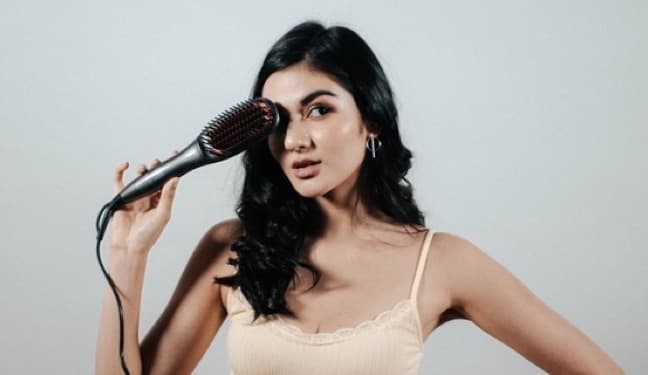
A straightener brush combines a heated surface with a familiar brushing motion. It often suits people looking for a smooth, naturally straight finish rather than the compressed result of a flat iron.
Compare tools against your own hair density and preferred section size. Dense bristles may grip smaller sections well, while a more open layout can be easier to clean and move through thicker hair.
Compare heat, not just maximum temperature
A wide temperature range is useful only when the controls are easy to understand and the tool can hold the selected setting. BeKind Anion uses an MCH heating system, a visible display, a scroll control, and temperature memory.
The best starting point is the lowest effective temperature, followed by a result check before making any adjustment.
- Available temperature range and increments
- Warm-up behavior and temperature stability
- Button placement and accidental-change protection
- Automatic shutoff
Look at daily usability
Weight, cord movement, handle comfort, display legibility, and cleaning access can matter as much as technical specifications. A tool that is awkward to hold or difficult to maintain is less likely to become part of a consistent routine.
Anion’s scroll control and memory setting are designed to reduce repeated setup. Other brushes may offer more temperature steps or different bristle arrangements, so compare the whole experience.
Use the comparison as a checklist
There is no universal best heated brush. The useful choice is the one whose temperature control, shape, bristle layout, and safety features align with your hair and habits.